Interop 2026 – a decisive step toward a more coherent, faster, and predictable web

Every year, Interop becomes one of the most important milestones for the web ecosystem. It’s not an event or a conference, but a coordinated effort among major browser vendors to work together toward a simple yet essential goal: a web that behaves the same everywhere. In 2026, this mission becomes more ambitious than ever.
Interop 2026 marks a new stage in collaboration between Chrome, Safari, Firefox, Edge, and other rendering engines. It represents a collective commitment to reduce cross‑browser inconsistencies, eliminate unpredictable behaviors, and accelerate the adoption of modern standards. For developers, this means fewer hacks, fewer workarounds, and a more stable web platform.
1. What is Interop and why does it matter?
Interop is an annual program where browser teams align on a shared set of priorities. Instead of each browser implementing standards at its own pace, Interop defines a clear list of technologies and behaviors that must work consistently across all engines.
In short, Interop is the antidote to:
- bugs that appear only in one browser
- CSS behaviors that differ between engines
- JavaScript APIs implemented partially or inconsistently
- slow adoption of modern features
In 2026, the initiative becomes more mature and more ambitious, reflecting the rapid evolution of the web platform.
2. What’s new in Interop 2026?
Interop 2026 introduces an expanded set of priority areas, covering both emerging technologies and long‑standing pain points developers have been asking to fix for years. The full list is extensive, but several themes clearly stand out.
2.1. Modern CSS becomes a top priority
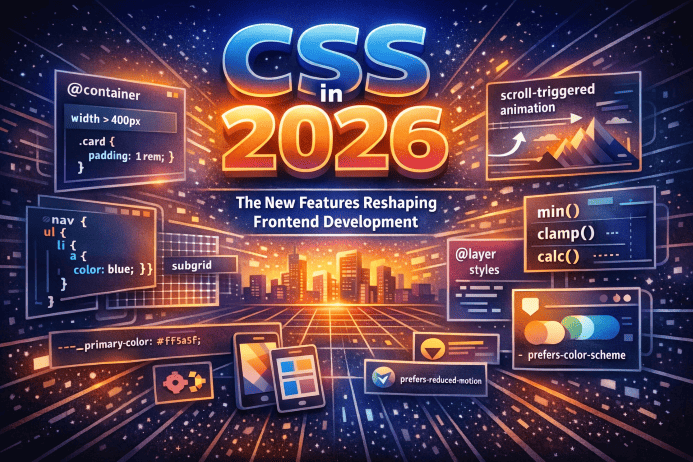
CSS has evolved dramatically in recent years, and Interop 2026 focuses on the features that are reshaping how we build layouts:
- Container Queries – more stable support and consistent behavior across browsers
- Subgrid – unified implementations for complex layouts
- Cascade Layers – eliminating subtle differences in cascade behavior
- CSS Nesting – aligning syntax and interpretation
- :has() – performance improvements and full compatibility
These features are already used in modern projects, but Interop 2026 aims to make them more predictable and performant everywhere.
2.2. Web Components become more robust
Web Components are a key part of the web’s future, but adoption has been slowed by cross‑browser inconsistencies. Interop 2026 includes improvements such as:
- more consistent Shadow DOM behavior
- unified Custom Elements implementation
- predictable slotting and styling
These enhancements will make Web Components easier to use in mixed ecosystems without hacks or polyfills.
2.3. Modern JavaScript APIs
Interop 2026 highlights APIs that are becoming essential for advanced web applications:
- WebGPU – near‑native graphics and compute performance
- WebAssembly – better interoperability and improved debugging
- View Transitions API – smooth transitions between pages and UI states
- File System Access – unified behavior for advanced web apps
These APIs push the web closer to native‑level capabilities.
3. Why is Interop 2026 so important for developers?
Every web developer knows how much time is lost debugging cross‑browser issues. A layout that works perfectly in Chrome may behave differently in Safari. An API that runs smoothly in Firefox may have limitations in Edge. Interop 2026 aims to drastically reduce these differences.
The benefits are clear:
- less time wasted on cross‑browser debugging
- fewer workarounds and hacks
- cleaner, more maintainable code
- faster adoption of modern standards
- better performance across all browsers
In short: Interop 2026 is not just a list of specs. It’s an investment in developer productivity.
4. How does Interop 2026 shape the future of the web?
As the web becomes the primary platform for applications, cross‑browser consistency becomes critical. Interop 2026 accelerates this transition by:
- stabilizing emerging technologies
- increasing trust in standards
- reducing ecosystem fragmentation
- improving user experience
A more coherent web means better, faster, and more accessible applications for everyone.
5. Conclusion
Interop 2026 is not just a technical announcement. It’s a statement of intent for the future of the web. In a time when technologies evolve rapidly and user expectations rise, collaboration between browsers becomes essential.
With Interop 2026, developers get a more predictable web. Users get a faster and more stable experience. And the industry gets a shared foundation for innovation.
It’s a major step forward — one that will shape how we build the web in the years to come.



Be the first to comment!