Digital Twins and Post‑Quantum Security in 2026
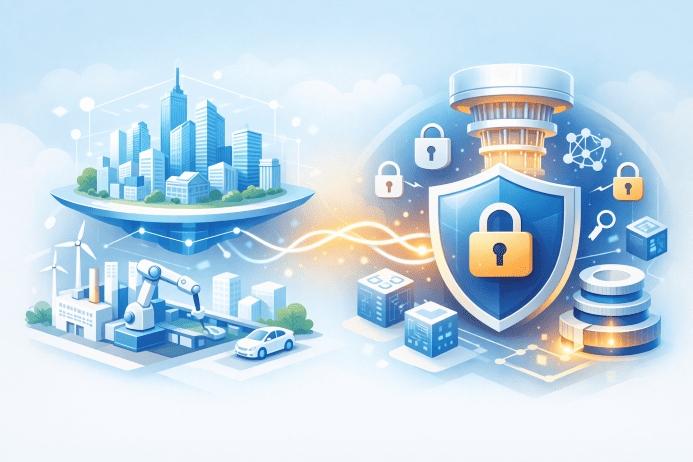
In 2026, Digital Twins and post‑quantum security emerge as two strategic pillars for companies aiming to stay competitive and protected in an accelerated digital world. Digital Twins enable advanced simulations and real‑time optimization, while post‑quantum security prepares infrastructures for an era in which quantum computers can break traditional cryptography.
1. What Digital Twins Are
Digital Twins are digital replicas of physical systems, processes, or objects. These virtual models are connected in real time to their physical counterparts, enabling continuous monitoring, analysis, and optimization.
Key characteristics:
- Accurate modeling of real objects or processes
- Real‑time updates based on IoT data
- Predictive simulations and “what‑if” scenarios
- Continuous performance optimization
2. Why Digital Twins Become Critical in 2026
The increasing complexity of industrial infrastructures, smart cities, and logistics networks makes Digital Twins indispensable. They allow companies to test changes without risk, reduce costs, and prevent failures before they occur.
Representative applications:
- Smart factories – simulation of production lines
- Smart cities – optimization of traffic and energy consumption
- Logistics – modeling transportation flows
- Healthcare – digital replicas of patients for personalized treatments
- Construction – testing structures before execution
3. What Post‑Quantum Security Is
Post‑quantum security refers to cryptographic technologies designed to withstand attacks performed using quantum computers. These machines can break traditional algorithms such as RSA or ECC in seconds, making the adoption of new standards essential.
Key elements:
- Cryptographic algorithms resistant to quantum attacks
- Long‑term protection of sensitive data
- Global standardization (NIST PQC)
- Gradual migration of existing infrastructures
4. The Connection Between Digital Twins and Post‑Quantum Security
Digital Twins generate and process massive amounts of sensitive data: industrial information, predictive models, medical data, or critical infrastructure details. In a post‑quantum world, this data becomes vulnerable if not properly protected.
Why they are interdependent:
- Digital Twins require secure communication between IoT devices and the cloud
- Digital models must be protected from unauthorized access
- Critical infrastructures (energy, transport, healthcare) cannot afford breaches
- “Harvest now, decrypt later” attacks threaten long‑term data confidentiality
5. How Post‑Quantum Security Is Implemented in Digital Twins
In 2026, companies begin transitioning to post‑quantum algorithms to secure Digital Twin ecosystems.
Essential steps:
- Auditing infrastructure and identifying vulnerable points
- Migrating to NIST‑recommended PQC algorithms
- Implementing post‑quantum encrypted communication channels
- Protecting digital models and IoT data flows
- Testing compatibility with existing hardware and software
6. Conclusion
Digital Twins and post‑quantum security form a crucial duo for the future of digital infrastructures. In 2026, companies adopting these technologies not only optimize their processes but also protect their data in a world where cyber threats evolve rapidly. The transition toward a secure and intelligent digital ecosystem begins now.


Be the first to comment!