SEO in the Age of AI: How to Get Indexed in a Generative Web

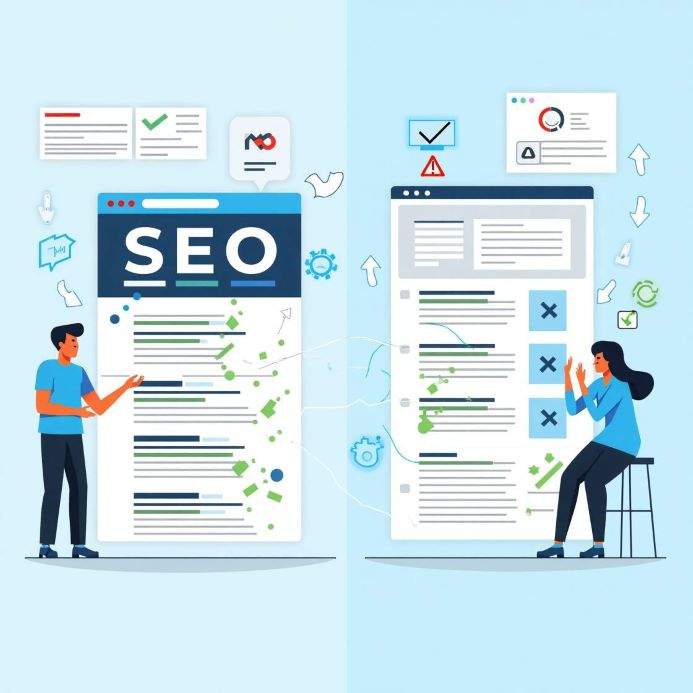
In 2025, SEO is no longer just about keywords and backlinks. AI assistants that generate direct answers are changing how your site appears — or disappears — from results. How do you optimize when the user no longer clicks, but receives an AI-generated summary?
1. Semantic structure is the new sitemap
AI models extract information logically. If you have a clear structure with headings, segmented articles, ordered lists, and coherent tags, your chances of being selected as a source increase significantly.
2. “Answer” content beats “explanation” content
In a generative web, AI engines look for answer-style phrases: “How much does a subscription cost?” followed by “A standard subscription costs...”. Write your content as if it’s being read by a voice assistant or chatbot.
3. Structured data for AI, not just for Google
Use schema.org, but go further: build microdata that identifies products, people, events, and offers. AI models can interpret this data and turn it into direct answers.
4. Original content + context = chance to be cited
Write clear, experience-based explanations. AI is trained to “credit” solid and consistent sources. If you’re the author of authentic content, you have a good chance of being cited in answers generated by Copilot or Gemini.
5. Write for humans, but learn to train the AI
Optimization is no longer just for crawlers. It’s for systems that understand natural language. Choose clear words, avoid ambiguous paragraphs, and provide examples. Think prompt-based: what questions is the user asking, and how would you answer them?
Conclusion
SEO in the age of AI is about structure, clarity, and context. It’s no longer just a ranking game — it’s a race for relevance. You have two options: be cited as an AI source or be ignored. Write like an expert, but think like a language model.



Be the first to comment!