CSS in 2026 – Real‑World Usage Analysis: Trends, Data, and Conclusions
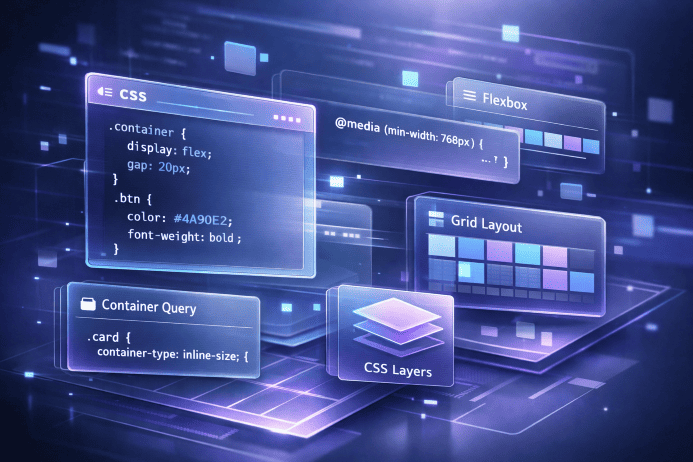
CSS has evolved dramatically in recent years. We now have container queries, subgrid, cascade layers, nesting, :has(), view transitions, and many other features that once seemed impossible. But between what CSS can do and what developers actually use in production, there is a huge gap.
In 2026, most websites don’t look like the polished examples shown at conferences. They are a mix of legacy code, modern techniques, CSS frameworks, utility classes, browser hacks, and quick fixes added under pressure. This article analyzes the real state of CSS usage in production and highlights the trends that truly matter.
1. Stylesheet Composition in 2026
The first thing you notice when analyzing CSS at scale is diversity. Some websites ship 20 KB of CSS, others hundreds of KB, and a few even exceed 1 MB. Why? Because modern stylesheets are a combination of:
- hand‑written CSS
- CSS frameworks (Tailwind, Bootstrap, older Foundation versions)
- auto‑generated CSS from tools
- inline styles injected by JavaScript libraries
- embedded fonts, icons, or images
In real projects, CSS is not just “styling code.” It is infrastructure — and infrastructure inherits everything that came before it.
2. CSS Size – Between Optimization and Reality
Although everyone talks about performance, the reality is that many websites ship far more CSS than necessary. Common reasons include:
- loading entire frameworks even when only 10% of classes are used
- large design systems with hundreds of variables and components
- tools that generate duplicated CSS
- third‑party libraries injecting their own styles
In 2026, a typical website ships between 100 KB and 300 KB of uncompressed CSS. Not ideal — but realistic.
3. Stylesheet Complexity
CSS complexity doesn’t come only from size. It also comes from:
- overly complex selectors
- high specificity
- unpredictable cascade interactions
- browser hacks
- multiple overlapping frameworks
In many projects, CSS becomes difficult to maintain not because it’s large, but because it’s chaotic. This is why CSS architecture matters more than ever in 2026.
4. At‑Rules – What’s Actually Used
Modern CSS introduces many new at‑rules, but adoption varies widely:
- @media – universal, used everywhere
- @font-face – still very common for brand fonts
- @keyframes – widely used for animations
- @supports – growing adoption, but not universal
- @layer – mostly used in design systems
- @container – adoption increasing, but not dominant
- @property – rare, used in advanced projects
In short: modern CSS exists, but it’s not yet mainstream across all codebases.
5. Selectors – Between Simplicity and Complexity
Selectors reveal a lot about a project’s maturity. In 2026, we see:
- simple class‑based selectors dominating
- long descendant selectors mostly in legacy code
- :has() being used, but carefully
- accessibility‑focused pseudo‑classes (
:focus-visible,:focus-within) gaining traction - specificity issues still common in large projects
Modern CSS encourages simplicity, but legacy codebases often pull in the opposite direction.
6. Declarations – What Properties Dominate in 2026
Across real‑world projects, several trends stand out:
- CSS variables – essential in design systems
- flexbox – still the most widely used layout method
- grid – massive adoption, though subgrid is still rare
- gap – used everywhere, including flex layouts
- clamp() – increasingly popular for typography and spacing
- aspect-ratio – widely adopted in 2026
CSS is becoming more declarative and predictable, but adoption of new features remains gradual.
7. Units – What Developers Use in 2026
CSS units have evolved, but real‑world usage looks like this:
- px – still dominant
- rem – heavily used in design systems
- em – less common than in the past
- vw/vh – used for modern layouts
- dvh/dvw – adoption growing due to mobile browser improvements
Modern units are useful, but they haven’t replaced traditional ones entirely.
8. CSS Frameworks – Who Leads in 2026?
In real‑world projects, the landscape looks like this:
- Tailwind CSS – dominant in modern commercial projects
- Bootstrap – still strong in enterprise and legacy systems
- CSS Modules – standard in React/Next.js ecosystems
- Styled Components – declining, but still present
- Sass – used in large legacy codebases, but rare in new projects
Tailwind gained ground thanks to speed and predictability. Bootstrap remains strong in enterprise environments.
9. Conclusions – The State of CSS in 2026
CSS in 2026 is more powerful than ever, but real‑world adoption is slow. Most projects use a mix of modern techniques and legacy patterns. New features are promising, but not yet universal.
In 2026, the developers who stand out are those who:
- understand modern CSS deeply
- know how to structure CSS at scale
- work effectively with design systems
- can navigate both old and new code
CSS is no longer “just styling.” It is a mature, complex language that plays a critical role in every modern web project.




Be the first to comment!